


Mirror Work vs Oxidised vs Kundan: Which Navratri Jewellery Trend Is Right for You?
Mirror work vs oxidised vs kundan jewellery comes down to three different priorities: mirror work leans boho and textured, oxidised leans traditional and versatile, and kundan leans polished and festive. None is objectively “better”, the right pick depends on your outfit, how many nights you’re dancing, and your budget. Here’s how the three trends actually compare.
Before diving into the comparison, it helps to shop with intent, Voylla’s Navratri jewellery collection carries all three finishes side by side, which makes the difference easier to see in person than in photos.
Most shoppers don’t need to pick just one trend for the whole festival, Navratri spans nine nights, several outfit colours, and varying levels of formality, so it’s common (and practical) to own pieces from more than one category. What matters is knowing which trend to reach for on which night, rather than assuming one finish should carry the entire wardrobe.
What Is Mirror Work Jewellery?
Mirror work jewellery uses small embedded glass or metal mirror pieces set into a base of metal or thread work, giving each piece a faceted, light-catching finish that photographs especially well under Garba lighting.
It’s rooted in boho and tribal jewellery styling, which is why it’s a natural match for chaniya choli and other folk-inspired garba outfits. Because the mirrors add visual weight without adding much physical weight, mirror work jewellery sets are usually comfortable for multi-hour wear, a genuine advantage during a nine-day festival. Stylists often recommend mirror work as the trend to reach for when an outfit already has heavy embroidery, since the mirrors pick up ambient light rather than competing with printed or embroidered detail.
Mirror work also scales well across price points, a single mirror-embellished pendant costs far less than a full set, which makes it an easy entry point for shoppers who want to try the trend before committing to earrings, necklace, and bangles together. Because the mirror pieces are usually stitched or set into a metal or thread base rather than glued, well-made mirror work jewellery tends to hold up across repeated wear better than cheaper festival-only pieces, provided it’s stored flat rather than folded.
What Is Oxidised Jewellery?
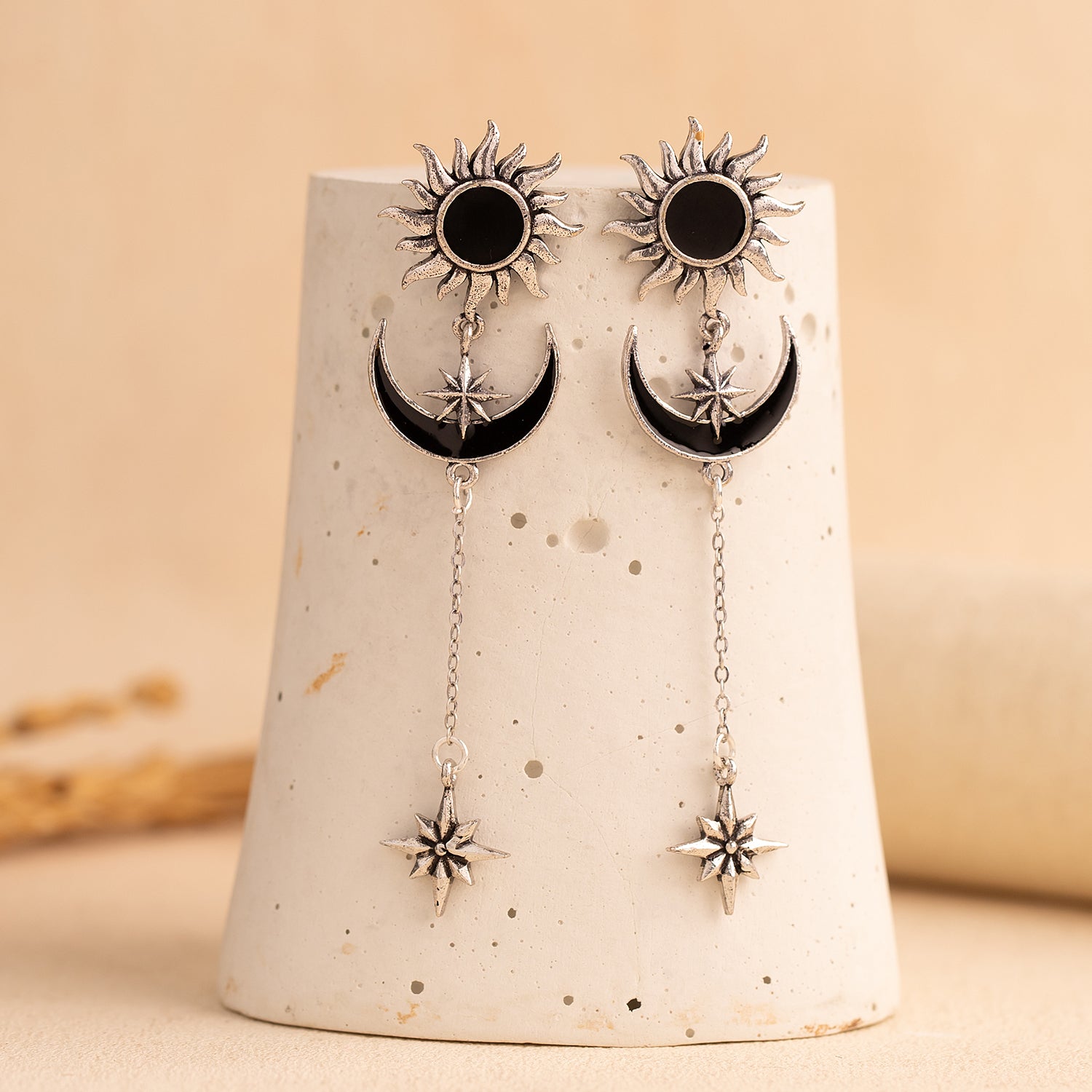
Oxidised jewellery is silver-toned metal (often brass or German silver) that’s been chemically treated to create a deliberately antiqued, darkened finish, giving it a rustic, traditional look rather than a polished shine.
This is the most versatile of the three trends, oxidised jewellery pairs with nearly every Navratri colour, from grey and green to royal blue and purple, which is part of why it’s become the default choice for traditional Indian jewellery for Garba. It’s also generally the lightest of the three trends, making it a strong option for anyone dancing multiple nights in a row. Based on current jewellery trends, oxidised jhumkas and layered necklaces are among the most repeated silhouettes across Navratri shopping searches this season.
Because the finish is already deliberately antiqued, oxidised jewellery also tends to show scuffs and wear far less than a polished gold-tone piece, which matters over a nine-day festival where jewellery gets handled, packed, and re-worn repeatedly. For anyone building a Navratri wardrobe on a budget, oxidised sets are usually the most efficient starting point, since a single grey or silver-toned set can realistically be repeated across four or five different outfit colours without looking repetitive.
What Is Kundan Jewellery?
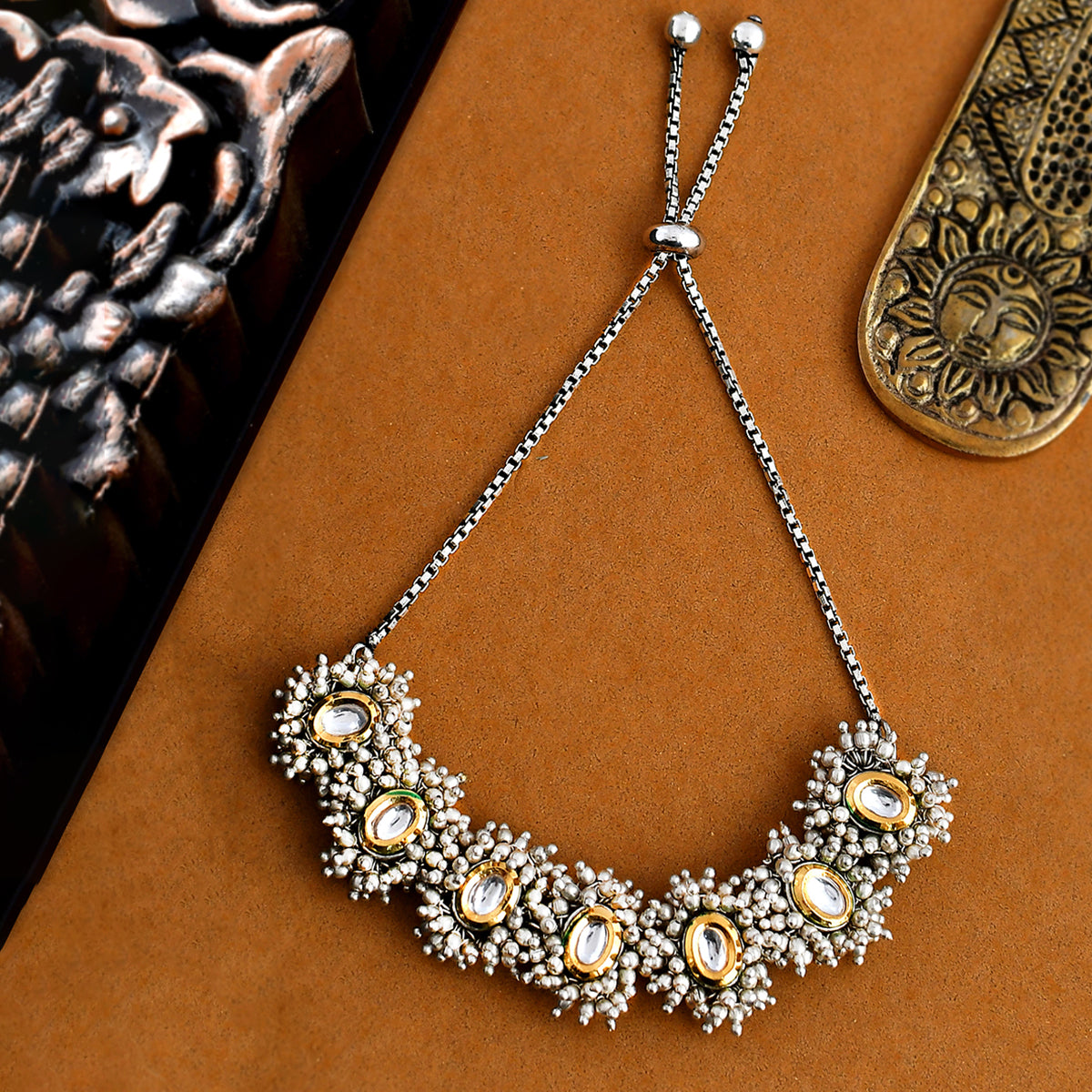
Kundan jewellery is a traditional technique where uncut, polished glass or stones are set into gold-toned metal using a lac (resin) base, producing a layered, glittering look associated with more formal or festive Indian occasions.
Of the three trends, kundan reads the most “dressed up”, it’s the finish most people reach for on the main nights of Navratri, sangeet-adjacent events, or when an outfit is richer in colour (red, orange, maroon). Kundan sets also tend to be heavier than oxidised or mirror work pieces, so they’re usually recommended for shorter wear windows rather than back-to-back dandiya sessions.
Kundan pairs particularly well with heavier embroidery, zari work, and richly coloured fabrics, since the technique itself was traditionally used for bridal and celebratory jewellery rather than everyday wear. A full kundan jewellery set, matching necklace, earrings, and maang tikka, also tends to photograph as more “finished” for events where outfit and jewellery are meant to be seen together in portraits rather than in motion.
Mirror Work vs Oxidised vs Kundan Comparison Table
|
Feature |
Mirror Work |
Oxidised |
Kundan |
|
Look |
Boho, textured, light-catching |
Rustic, traditional, matte |
Polished, glittering, formal |
|
Weight |
Light to medium |
Lightest |
Heaviest |
|
Best Colours |
Green, white, purple |
Grey, green, blue, purple |
Yellow, orange, red |
|
Comfort for 9 Nights |
High |
Highest |
Moderate |
|
Typical Price Range |
Mid |
Budget to mid |
Mid to premium |
|
Best Occasion |
Garba, day events |
Garba, Dandiya, daily festive wear |
Main nights, dressier events |
Best For Garba
Which jewellery trend is best for Garba? Oxidised jewellery is generally the best fit for Garba nights, since the dance involves continuous arm and head movement and lighter pieces hold up better over several hours than heavier kundan sets.
Mirror work is a close second, especially for outfits with mirror-embellished chaniya choli, since the two elements visually reinforce each other. Kundan can still work for Garba, but it’s better suited to the earlier, less physically demanding part of the evening.
If Garba is the main event of your night, rather than a short appearance before a more formal gathering, weight should outrank looks when choosing between the three trends. A slightly less elaborate oxidised set that stays comfortable for three hours is a better choice than a heavier statement piece that needs adjusting every few songs.

Best For Dandiya
Which jewellery trend is best for Dandiya? Oxidised jewellery again takes the lead for Dandiya, since the stick movements add extra motion around the wrists and shoulders, and lightweight bangles and jhumkas move with the body instead of pulling at it.
For Dandiya specifically, stylists often recommend keeping earrings smaller than usual, even within oxidised styles, since swinging jhumkas can tangle with dupattas or hair during fast stick sequences.
Bangles deserve extra thought for Dandiya too, since the sticks make direct contact with the wrist repeatedly through the night. Lighter oxidised bangle stacks tend to be more forgiving here than rigid kundan cuffs, which can feel restrictive during faster rounds of play.
Best For Chaniya Choli
Which jewellery trend pairs best with chaniya choli? Mirror work and oxidised jewellery both pair naturally with chaniya choli, since the silhouette is rooted in the same folk and tribal aesthetic that both trends draw from.
Kundan can be paired with a chaniya choli, but it tends to look more festive and less folk-authentic, a valid choice if the goal is a dressier interpretation of the outfit rather than a traditional one.
A useful rule of thumb: the more mirror work, thread embroidery, or tribal detailing already on the chaniya choli, the more the jewellery should lean oxidised or mirror work rather than kundan, so the outfit and jewellery read as one cohesive styling choice rather than two competing aesthetics.
Best For Modern Garba Outfits
Which jewellery trend pairs best with a modern garba dress? Oxidised statement pieces, a single large choker or a bold cuff, tend to work best with modern, minimally embroidered garba outfits, since the outfit’s simplicity gives the jewellery room to stand out.
Mirror work also works well here if the modern outfit leans boho rather than structured. Kundan is the least natural fit for modern silhouettes, since its formality can look mismatched against contemporary cuts.
Modern garba dress trends have also moved toward mixing Indo-Western elements, a crop top and skirt instead of a full chaniya choli, for instance, and oxidised jewellery tends to translate best across that kind of fusion styling, since its rustic finish doesn’t read as strictly “traditional formal” the way kundan does.
Best For Budget Shoppers
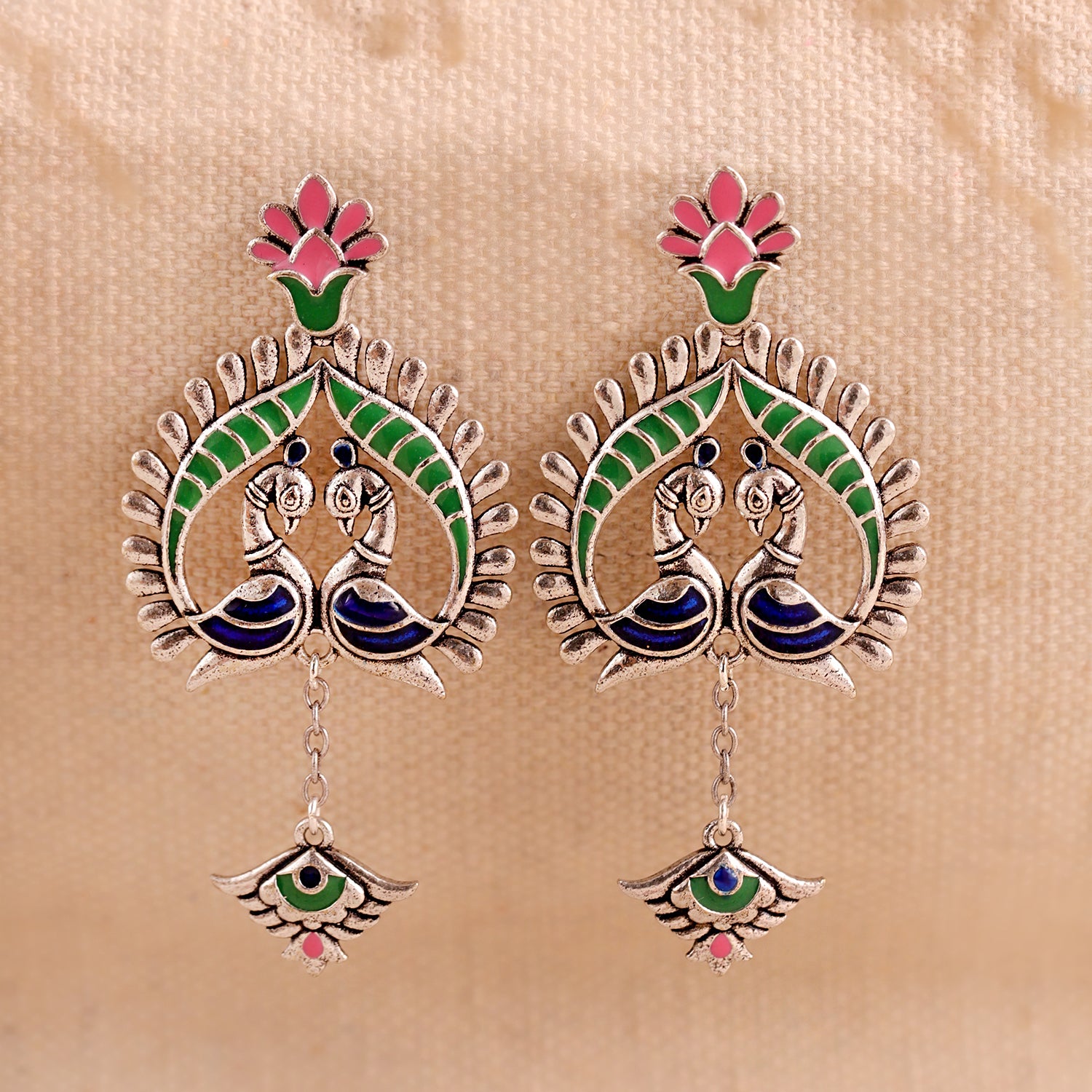
Which jewellery trend is most budget-friendly? Oxidised jewellery is typically the most accessible of the three, since it uses base metals without the labour-intensive stone-setting process kundan requires.
Mirror work sits close behind, with pricing depending mostly on how many mirrors and how much detailing a piece has. Kundan is generally the most premium of the three due to the technique’s complexity, though entry-level kundan pieces are still available for those who want the look without the higher price point.
For shoppers working with a fixed festival budget, a practical split is to allocate most of the budget to one or two versatile oxidised sets that can be repeated across several nights, and reserve a smaller portion for a single kundan piece, often just earrings or a maang tikka rather than a full set, for one standout evening.
Best For Premium Festive Looks
Which jewellery trend suits a premium festive look? Kundan jewellery is the clear choice for a premium, dressed-up Navratri look, particularly for the more significant nights of the festival or accompanying events.
A well-matched kundan jewellery set, necklace, earrings, and maang tikka together, tends to photograph and read as more “complete” for occasions where the outfit itself is already elaborate, such as a heavily embroidered lehenga choli.
For a premium look without full kundan weight, some shoppers opt for kundan earrings and a maang tikka paired with a lighter oxidised or silver necklace, this keeps the festive sparkle near the face, where it’s most visible, while reducing overall weight on the neck and shoulders through a long evening.
Jewellery Trend Predictions
Based on current jewellery trends, oxidised jewellery with mirror work detailing, essentially a hybrid of the two, is gaining ground as shoppers look for pieces that offer oxidised comfort with mirror work’s visual texture. Statement earrings, particularly oversized jhumka earrings and chandbali earrings, continue to outperform smaller stud styles for festival shopping. Layered necklaces are also increasingly popular as a way to elevate a simpler outfit without switching to a full kundan jewellery set. Colour-matched enamel work on oxidised bases is another direction gaining traction, since it lets a fundamentally lightweight, traditional piece pick up the specific shade of an outfit without needing separate gemstones.
Final Recommendation
If you’re choosing one trend for practicality across all nine nights, oxidised jewellery is the strongest all-rounder, lightweight, colour-versatile, and priced accessibly. If your outfit leans boho or heavily embroidered, mirror work is worth prioritising for how well it complements texture. If you want one standout look for the festival’s dressier nights, kundan jewellery is worth the investment, even if it isn’t your everyday pick. Many shoppers end up buying across all three, using oxidised for daily Garba and Dandiya rotation and kundan for one or two statement nights. If budget only allows for one purchase this season, oxidised remains the most defensible choice on versatility alone, it’s the only one of the three trends that realistically works across all nine Navratri colours, every night of dancing, and most budget ranges at once.
Frequently Asked Questions
1. Which is better for Navratri, mirror work or oxidised jewellery? Neither is strictly better; it depends on the outfit and comfort needs. Mirror work suits heavily embroidered or boho outfits and adds visual texture, while oxidised jewellery is lighter, more colour-versatile, and generally more comfortable for repeated multi-hour wear across several nights.
2. Is kundan jewellery too heavy for Garba dancing? Kundan sets are typically heavier than oxidised or mirror work pieces, so they can feel less comfortable during long, physically active Garba sessions. Many people reserve kundan for shorter wear windows or the festival’s main nights rather than back-to-back dancing.
3. What’s the price difference between oxidised and kundan jewellery? Oxidised jewellery is generally the most budget-friendly of the two, since it uses base metals without kundan’s labour-intensive stone-setting process. Kundan jewellery tends to be priced higher due to the technique and detailing involved, though entry-level kundan pieces exist.
4. Does mirror work jewellery suit every Navratri colour? Mirror work works especially well with green, white, and purple outfits, where its light-catching quality stands out. It can be paired with other colours too, but it tends to look most intentional against outfits that already carry some embroidery or texture.
5. Can I mix oxidised and kundan jewellery in one look? It’s possible but not usually recommended, mixing metal finishes in the same look can read as mismatched. If combining, keep one dominant piece (like an oxidised necklace) and use the second trend only in a small accent, such as a ring.
6. What jewellery trend works best for a black garba dress? All three trends work with black, since it acts as a neutral base. Oxidised offers a subtler, traditional contrast; kundan adds a dressier, more festive contrast; mirror work adds texture and shine without changing the outfit’s tone.
7. Is oxidised jewellery considered traditional or modern? Oxidised jewellery is rooted in traditional Indian jewellery styling but has become a staple of modern garba dress looks too, largely because its rustic finish pairs well with both classic and contemporary silhouettes.
8. What jewellery trend is best for someone attending Garba every night? Oxidised jewellery is generally the best fit for daily wear across the festival, given its lighter weight, lower cost per piece, and ability to pair with multiple outfit colours without needing a new set each night.
9. Which trend photographs best for Navratri content or events? Mirror work tends to photograph the most dynamically under changing light, since the mirrors catch and reflect movement. Kundan photographs well in still, well-lit settings, while oxidised has a more consistent, matte look across lighting conditions.
10. Are mirror work, oxidised, and kundan jewellery available as matching sets? Yes, most Navratri jewellery collections offer coordinated sets (earrings, necklace, and sometimes a maang tikka or bangles) in each of the three finishes, which is usually simpler than buying pieces separately.
11. What should a first-time Navratri jewellery shopper prioritise? Comfort and versatility should come first, an oxidised set that pairs with multiple outfit colours is a safer starting investment than a single-colour kundan piece, which is more limited in how often it can be reused.
12. Where can I compare mirror work, oxidised, and kundan jewellery in one place? Voylla’s Navratri jewellery collection groups pieces by finish, making it easier to compare mirror work, oxidised, and kundan jewellery styles side by side before deciding.
Conclusion
The mirror work vs oxidised vs kundan jewellery decision isn’t about picking a “winner”, it’s about matching the trend to the night. Oxidised jewellery wins on comfort and versatility for Garba and Dandiya marathons. Mirror work wins on texture for boho and heavily embroidered outfits. Kundan wins on polish for the festival’s dressier occasions. Most wardrobes benefit from having at least one piece from each. To compare all three finishes directly, shop jewellery for Garba nights from Voylla’s Navratri edit.
