


Raksha Bandhan 2026: Date, Shubh Muhurat, History, Significance, Rituals & Celebration Guide
Raksha Bandhan is one of the most emotionally significant festivals in the Hindu calendar, and Raksha Bandhan 2026 falls on Friday, 28th August 2026. The festival marks the timeless bond between brothers and sisters through the tying of a sacred thread, or rakhi, and this year's celebration carries an added layer of auspiciousness because Bhadra kaal ends before sunrise, leaving the entire morning free for the ceremony. Whether you are planning the rituals at home, choosing a rakhi for your brother, or arranging delivery for siblings living abroad, this guide covers everything you need, from the correct muhurat to the deeper meaning behind the thread itself.
What is Raksha Bandhan?
Raksha Bandhan, literally translated as "the bond of protection," is an annual Hindu festival celebrated on the full moon day (Purnima) of the Shravana month. On this day, a sister ties a rakhi, a decorative or sacred thread, around her brother's wrist as a symbol of love and protection. In return, the brother promises to protect and support his sister through life's challenges, often accompanied by a gift.
Quick answer: Raksha Bandhan is a Hindu festival where sisters tie a protective thread called rakhi on their brothers' wrists, symbolising love, duty, and lifelong protection between siblings, celebrated on Shravana Purnima every August.
While the festival is rooted in the brother-sister relationship, its meaning has expanded over generations. Today, rakhis are tied between cousins, friends, neighbours, and even to symbolise protection of the nation, trees, and community bonds, a reflection of how adaptable this tradition has remained across centuries.
Why is Raksha Bandhan Celebrated?
At its core, Raksha Bandhan celebrates the idea that protection and care flow both ways in a relationship built on trust. It is not simply a ritual, it represents a promise.
Quick answer: Raksha Bandhan is celebrated to honour the emotional and protective bond between brothers and sisters, reaffirm familial duty, and mark the change of season during Shravana month, a time traditionally associated with renewal and new beginnings in Indian culture.
Several layers of meaning are attached to the day:
- Familial duty, the brother's vow to protect his sister, and the sister's blessing for his wellbeing and prosperity.
- Seasonal significance, Shravana marks the height of the monsoon, historically a time for community gatherings and religious observance.
- Cultural continuity, the festival has been reinterpreted through mythology, history, and modern life without losing its central emotional thread (quite literally).
This is why Raksha Bandhan continues to hold relevance not just as a ritual but as a living tradition passed down through Indian festivals, generation after generation.
History and Origin of Raksha Bandhan
The origins of Raksha Bandhan are woven through several stories from Indian mythology and history. While there is no single definitive origin, three narratives are most commonly cited as the roots of the tradition.
Krishna and Draupadi
One of the most beloved stories associated with Raksha Bandhan comes from the Mahabharata. When Lord Krishna injured his finger, Draupadi tore a strip of cloth from her saree to bandage the wound. Touched by her gesture, Krishna vowed to protect her whenever she needed him, a promise he famously fulfilled during her moment of distress in the Kaurava court. This story is often cited to explain the emotional depth of the rakhi ceremony: protection given freely is repaid many times over.
Rani Karnavati and Humayun
A widely referenced historical account involves Rani Karnavati, the widowed queen of Mewar, who is said to have sent a rakhi to the Mughal emperor Humayun when her kingdom faced invasion. Though historians debate the authenticity of this event, it has become a powerful cultural symbol of rakhi transcending religion and rivalry, representing protection as a universal human value rather than a purely familial one.
Indra and Indrani
The Bhavishya Purana recounts how Indra, the king of gods, was losing a long battle against demons. His wife Indrani (Shachi) tied a sacred protective thread on his wrist, invoking divine blessings. Fortified by this thread, Indra returned to battle and reclaimed his throne. This legend is considered one of the earliest references to a protective thread ritual and is often linked to the origins of the Raksha Bandhan tradition and the older Vedic practice of Rakshasutra.
Together, these three stories show why Raksha Bandhan is not tied to a single religious text but has evolved as a cultural celebration of protection, loyalty, and unconditional bonds, a theme that resonates well beyond the brother-sister relationship.
Raksha Bandhan 2026 Date
Raksha Bandhan 2026 will be celebrated on Friday, 28th August 2026.
The festival always falls on Shravana Purnima, the full moon day of the Shravana month according to the Hindu lunisolar calendar. Because this calendar is based on lunar cycles, the corresponding Gregorian date shifts every year, which is why Raksha Bandhan sometimes falls in early August and sometimes towards the end of the month.
Raksha Bandhan 2026 Shubh Muhurat
Timing matters a great deal in Raksha Bandhan rituals. Tradition holds that the rakhi should not be tied during Bhadra kaal, a period considered inauspicious for beginning any sacred or celebratory activity. The good news for 2026: Bhadra kaal concludes before sunrise, which means the entire morning is considered clean and auspicious for the ceremony.
|
Detail |
Timing |
|
Date |
Friday, 28th August 2026 |
|
Day |
Friday |
|
Rakhi Tying Muhurat |
05:57 AM to 09:48 AM (Duration: approx. 3 hours 51 minutes) |
|
Bhadra Start |
Not applicable, Bhadra ends before sunrise |
|
Bhadra End |
Before sunrise on 28th August 2026 |
Quick answer: The Raksha Bandhan 2026 shubh muhurat falls between 5:57 AM and 9:48 AM IST on 28th August. Since Bhadra kaal ends before sunrise this year, the entire morning is auspicious, giving families a wide and stress-free window to complete the rakhi ceremony.
Note: Muhurat timings can vary slightly by 10–20 minutes depending on your city and region. It's always a good idea to cross-check with a local panchang for your specific location.
Importance of Rakhi in Indian Culture
The rakhi itself, the thread tied during the ceremony, carries meaning far beyond its physical form. In Indian culture, threads and knots have long been symbols of protection, commitment, and sacred bonds, seen also in ceremonies like the Kalava thread tied during pujas.
A rakhi typically represents:
- A promise of protection, from the brother towards the sister.
- A blessing of wellbeing, from the sister towards the brother.
- Continuity of family bonds, especially important in a country where siblings often live apart due to work, marriage, or migration.
- A tactile, lasting symbol, unlike words, a rakhi remains on the wrist for days, serving as a physical reminder of the commitment made.
This is also why the choice of rakhi has evolved to carry personal meaning. A simple thread and a piece of fine jewellery both serve the same emotional purpose, but the growing preference for finer, durable rakhis, such as those made in sterling silver, reflects how families now want the symbol to last as long as the sentiment it represents.
Raksha Bandhan Rituals Step-by-Step
While regional variations exist, the core Raksha Bandhan ceremony generally follows these steps:
- Preparation of the thali, a decorative plate is arranged with rakhi, roli (vermillion), rice grains, a diya (lamp), and sweets.
- Aarti, the sister performs a small aarti for her brother, waving the lit diya in front of him as a gesture of blessing.
- Tilak, a tilak of roli and rice is applied to the brother's forehead, symbolising protection and good fortune.
- Tying the rakhi, the sister ties the rakhi around her brother's right wrist while reciting blessings or a small prayer.
- Sweets exchange, the brother is offered a sweet, traditionally as a gesture of goodwill.
- Gift giving, the brother presents a gift to his sister, symbolising his promise of care and support.
- Blessings from elders, in many households, elders bless both siblings, reinforcing family unity.
Some families also include a small puja before the ceremony begins, invoking blessings for the health and prosperity of both siblings.
Different Types of Rakhi Available Today
The modern rakhi market has expanded well beyond the simple cotton thread of decades past. Today's options blend tradition with craftsmanship, and choosing the right one often comes down to personal style, spiritual preference, and budget.
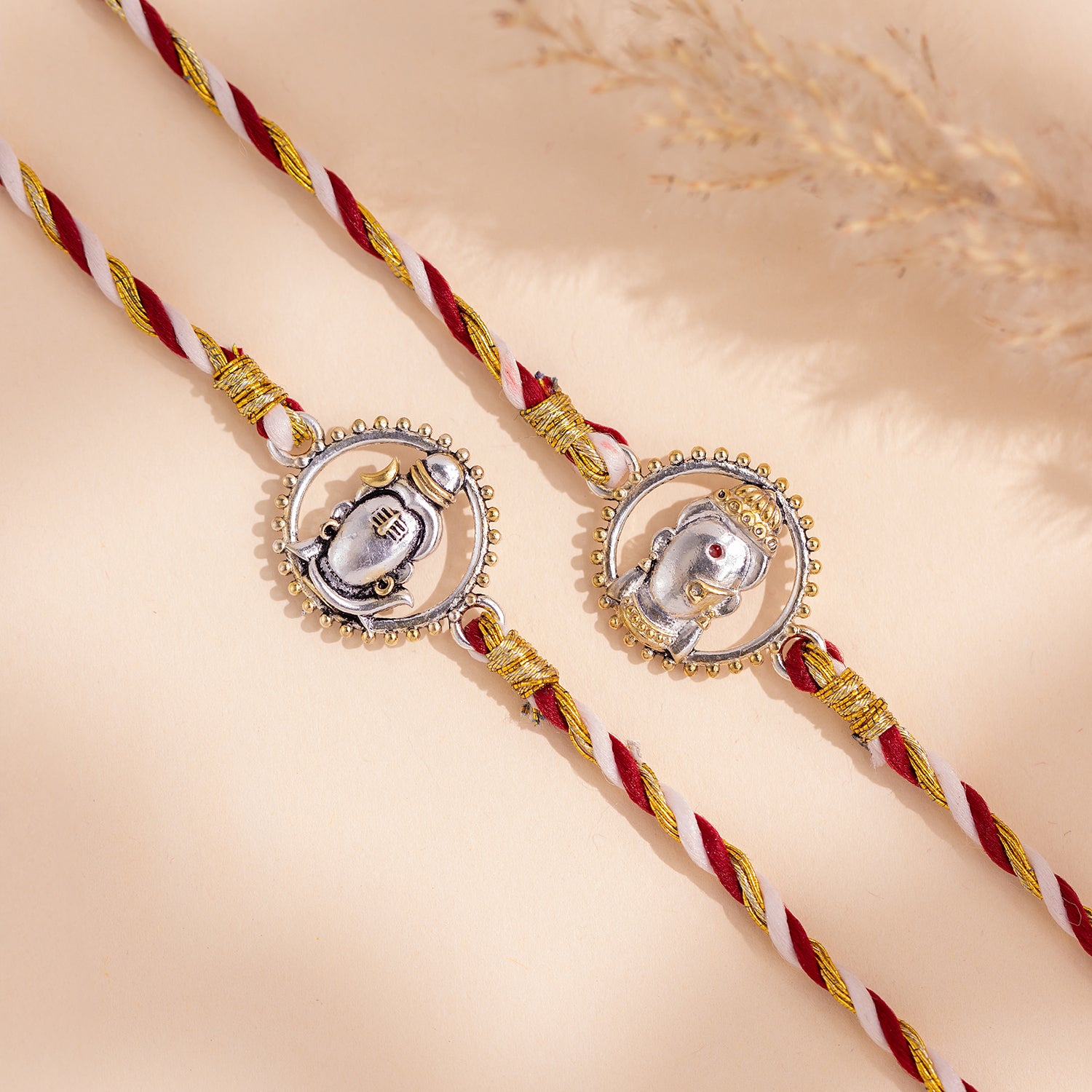
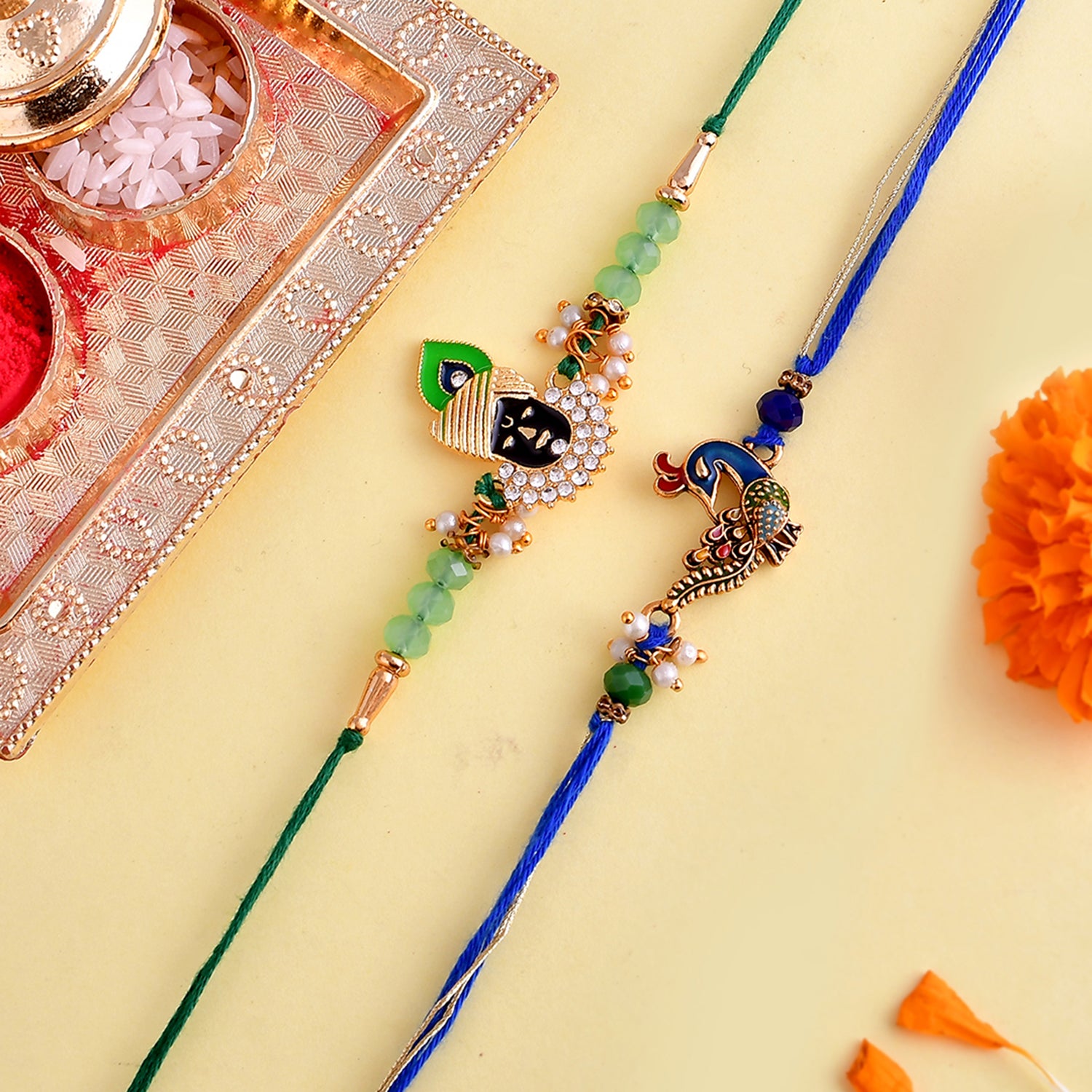
Silver Rakhi A Silver Rakhi combines the sentimental value of the ceremony with the lasting quality of fine jewellery. Crafted typically in sterling silver, these rakhis are meant to be kept, not discarded after the festival, making them a popular choice for families who want the gesture to have staying power.
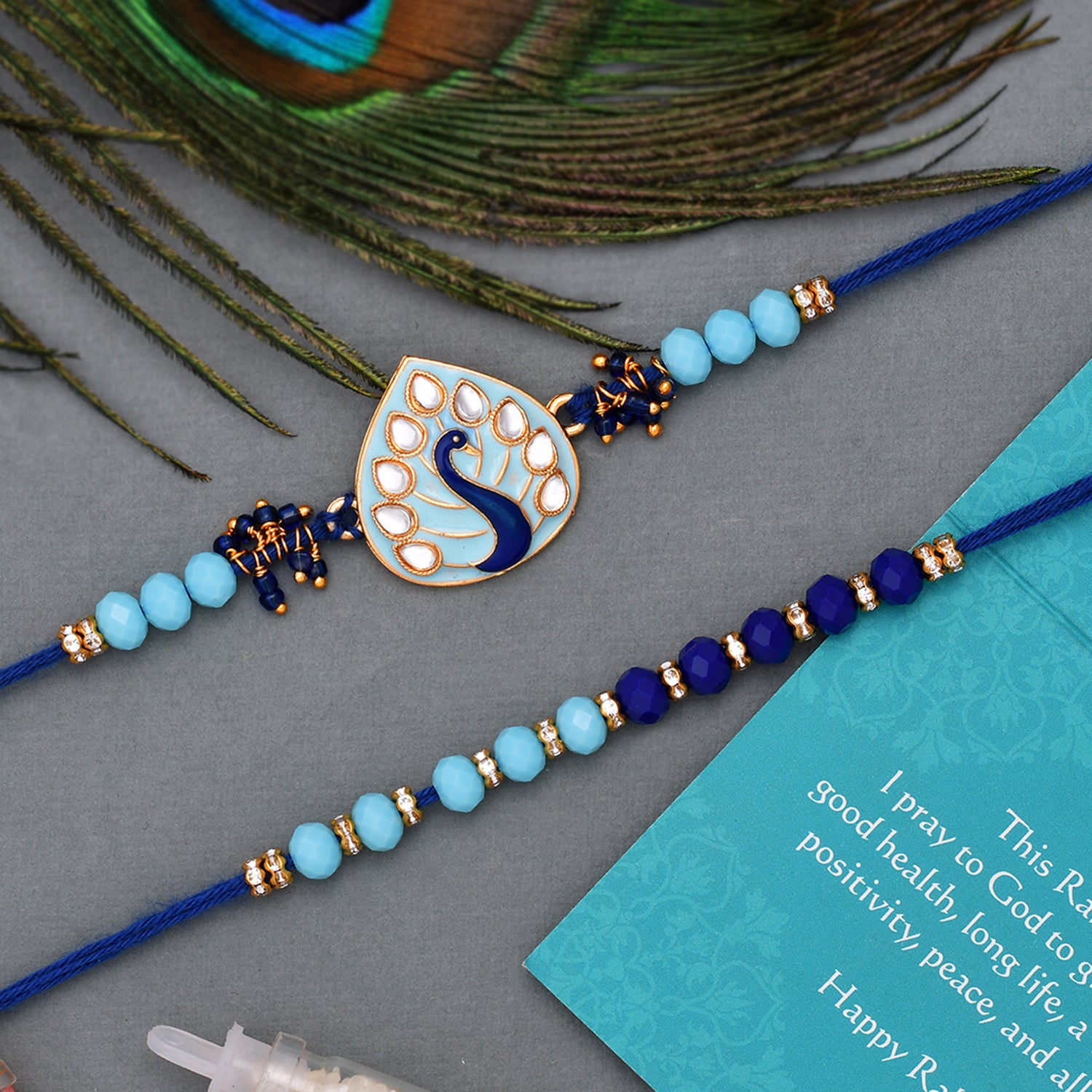
Rakhi Bracelet A rakhi bracelet takes the traditional thread format and reimagines it as wearable jewellery, often with clasps, charms, or refined detailing, so brothers can comfortably wear it well beyond the festival week.
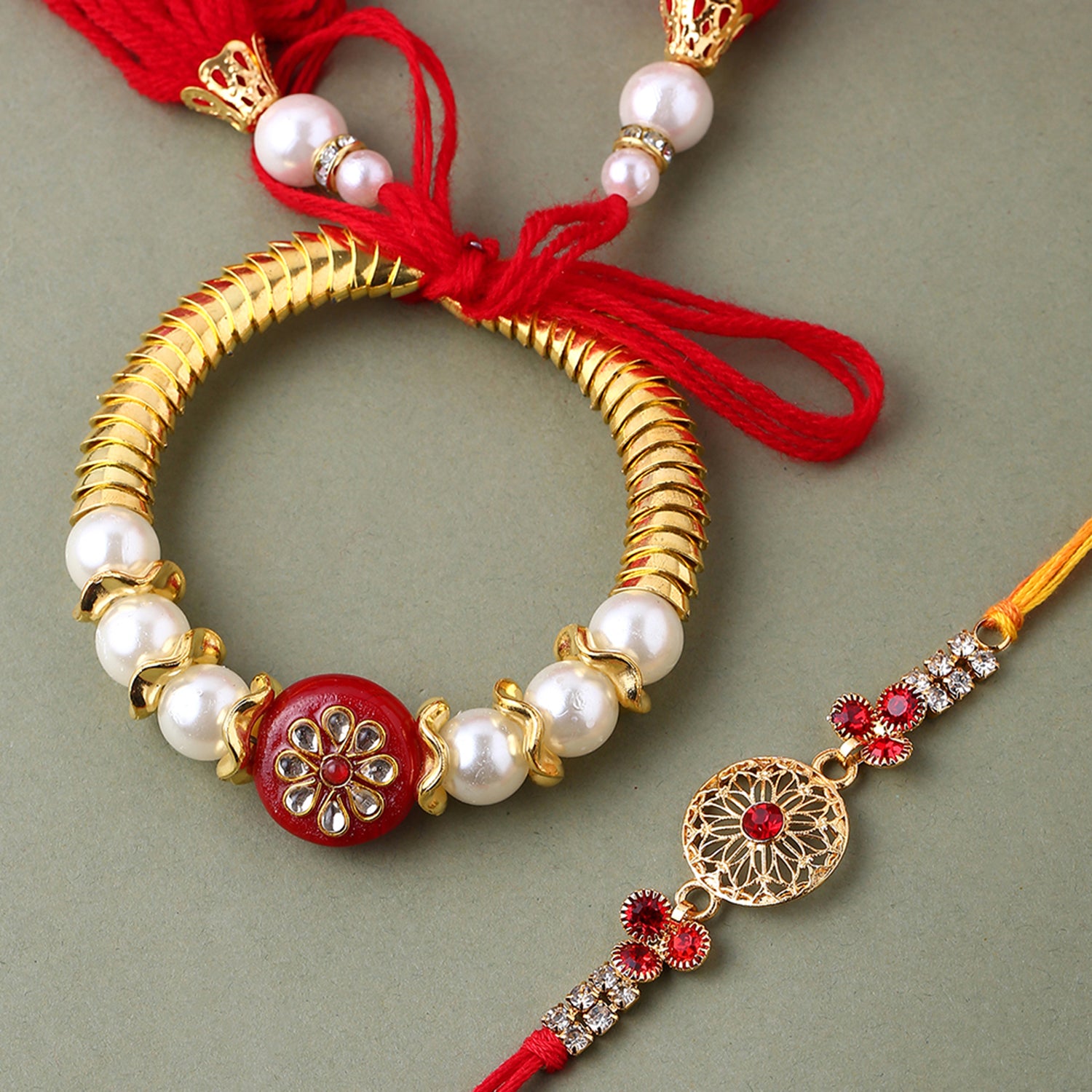
Bhaiya Bhabhi Rakhi Many households also honour the sister-in-law during the celebration with a Bhaiya Bhabhi Rakhi set, which typically pairs a rakhi for the brother with a complementary lumba rakhi or bracelet for the bhabhi, extending the ritual to include her as part of the family bond.
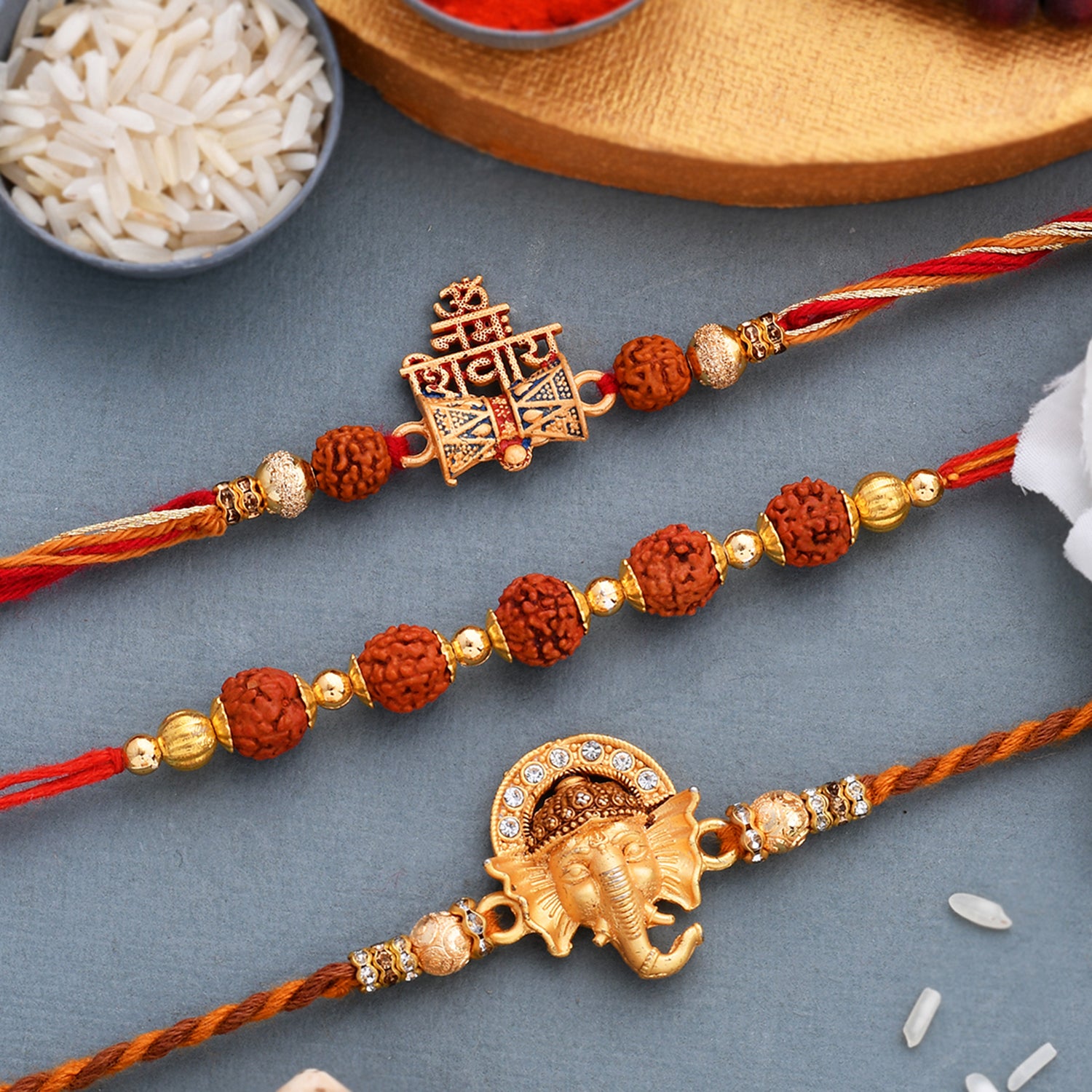
Rudraksha Rakhi For families with a spiritual inclination, a Rudraksha Rakhi incorporates rudraksha beads, associated in Hindu tradition with protection and positive energy, making it a popular pick among devotional and spiritual rakhi buyers.
Krishna Rakhi Featuring motifs of Lord Krishna, this style resonates strongly with families who observe Raksha Bandhan close to Krishna Janmashtami, drawing a symbolic connection between devotion and sibling protection.
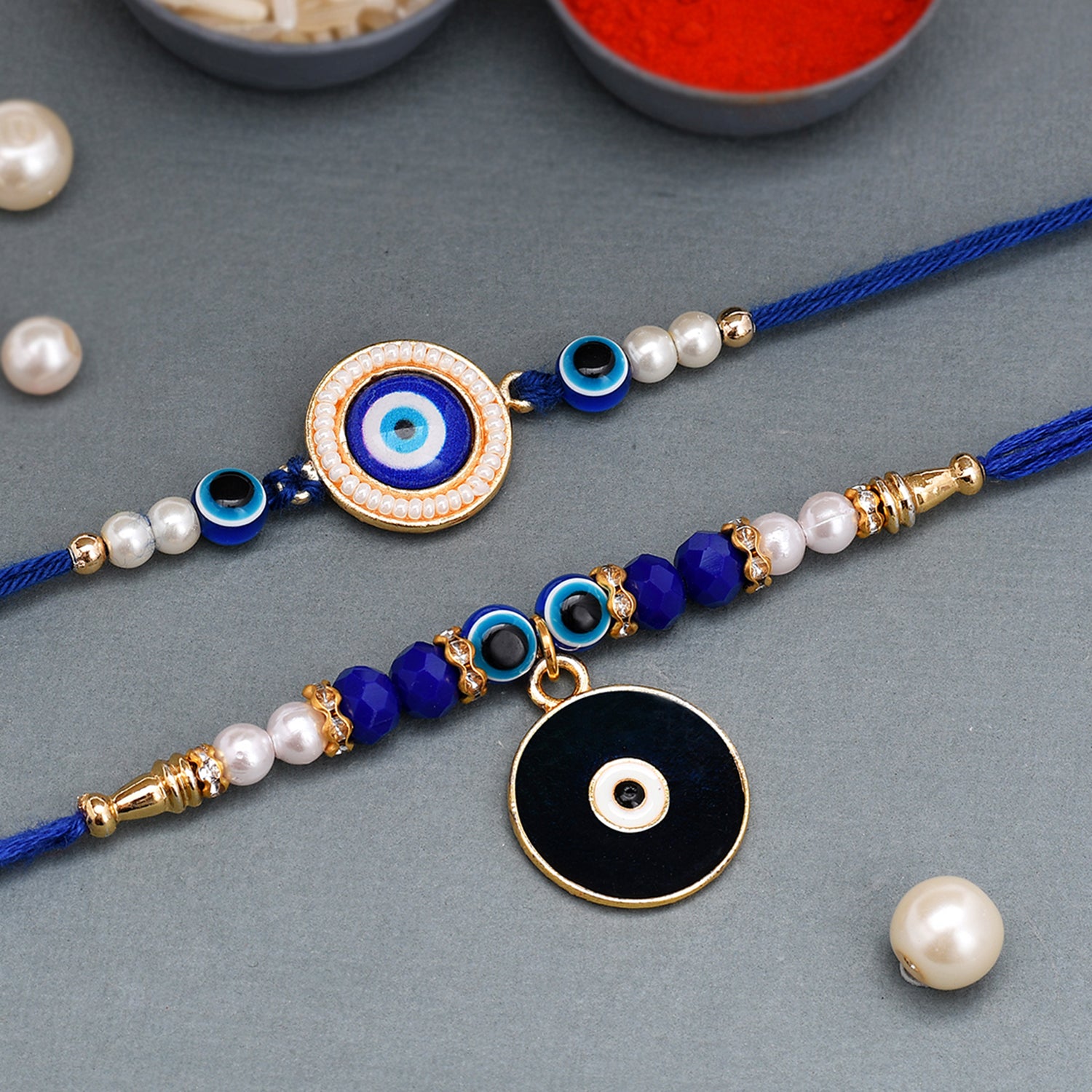
Evil Eye Rakhi An Evil Eye Rakhi has grown popular among younger buyers who want a rakhi that doubles as a fashionable accessory while carrying the symbolic meaning of warding off negative energy.
Kundan Rakhi A Kundan Rakhi brings traditional Indian craftsmanship to the celebration, often featuring intricate stone-setting work that gives the rakhi a regal, festive look suited to grand family celebrations.
Diamond Rakhi For those looking to make a more premium gesture, a Diamond Rakhi, typically featuring American diamond or cubic zirconia detailing, adds sparkle and sophistication without the ceremony losing its sentimental core.
Beaded Rakhi A Beaded Rakhi offers a more casual, colourful option, often favoured for younger brothers or when a lighter, everyday-wearable style is preferred over ornate designs.
Browsing a curated Rakhi Store can make it easier to compare these styles side by side before deciding which best matches your brother's personality and your budget.
How Raksha Bandhan is Celebrated Across India
Raksha Bandhan takes on distinct regional flavours across the country:
- North India, large family gatherings, elaborate thalis, and a strong emphasis on the sister travelling to her brother's home if she lives elsewhere.
- Maharashtra and Gujarat, the festival coincides with Narali Purnima, where coconuts are offered to the sea, blending Raksha Bandhan with regional coastal traditions.
- West Bengal, celebrated as Jhulan Purnima in some communities, with an emphasis on communal bonding, not limited strictly to siblings.
- South India, observed as Avani Avittam in some Brahmin communities, marking a sacred thread-changing ceremony rather than the sibling-focused celebration seen in the north.
- Rajasthan, historically linked to the Rani Karnavati legend, with strong emphasis on the protective symbolism of the thread.
This regional diversity is part of what makes Raksha Bandhan one of India's most widely observed festivals; it flexes to fit local customs while preserving its emotional core.
Modern Ways to Celebrate Raksha Bandhan
As families become more geographically spread out, the way Raksha Bandhan is celebrated has adapted considerably:
- Video call ceremonies, sisters and brothers who cannot meet in person often conduct a shortened version of the ceremony over video call, followed by a rakhi sent by courier.
- Curated gift hampers, rather than a single gift, many now opt for Rakhi Gift Hampers that combine the rakhi with sweets, accessories, or personal care items.
- Combo sets for convenience, Rakhi Gift Combos that pair a rakhi with a coordinated gift have become popular for their convenience and presentation value.
- Sustainable and reusable rakhis, a growing number of buyers are choosing rakhis made from durable materials like silver, precisely because they can be reused or preserved as keepsakes rather than discarded.
- Personalised touches, engraving, custom packaging, and handwritten notes are increasingly common additions to the modern rakhi gift.
How to Send Rakhi Abroad
For the large Indian diaspora, Raksha Bandhan often means coordinating logistics across time zones and continents well in advance. Planning ahead for shipping cut-offs is essential, since international delivery windows tighten significantly close to the festival date.
If your brother lives outside India, here's what to keep in mind:
- Send Rakhi to USA, Given custom clearance timelines, orders should ideally be placed at least 10–12 days before 28th August 2026 for standard delivery. Send Rakhi to USA options typically include both standard and expedited shipping.
- Rakhi Delivery in USA, Metro areas generally see faster turnaround than smaller towns, so factor in a buffer of a few extra days for non-metro addresses.
- Send Rakhi to UAE, With a large Indian community across Dubai, Abu Dhabi, and Sharjah, Send Rakhi to UAE services are in high demand as the festival approaches.
- Rakhi Delivery in Dubai, Dubai specifically sees a spike in orders in the final week before Raksha Bandhan, so early booking helps avoid last-minute rush charges.
- Send Rakhi to Canada, Similar to the US, Send Rakhi to Canada orders benefit from being placed with enough lead time to account for customs processing.
- Send Rakhi to Singapore, Send Rakhi to Singapore deliveries are generally quicker due to shorter transit routes but still benefit from early ordering during peak festival week.
If you're coordinating rakhis for siblings across multiple countries, exploring a dedicated Send Rakhi Abroad service can simplify tracking multiple international orders from a single place. It's also worth pairing the rakhi with something from a broader Gifting Store selection, since many diaspora families like to send an accompanying gift alongside the thread itself.
Key Takeaways
- Raksha Bandhan 2026 falls on Friday, 28th August 2026, observed on Shravana Purnima.
- The shubh muhurat for 2026 is 5:57 AM to 9:48 AM, with Bhadra kaal ending before sunrise, making the whole morning auspicious.
- The festival's roots draw from multiple legends, including Krishna-Draupadi, Rani Karnavati-Humayun, and Indra-Indrani.
- Rakhi styles today range from traditional threads to fine jewellery like Silver Rakhi, Rudraksha Rakhi, and Diamond Rakhi options.
- International shipping requires early planning, particularly for Send Rakhi to USA and Send Rakhi to UAE deliveries.
Frequently Asked Questions
1. When is Raksha Bandhan in 2026? Raksha Bandhan 2026 falls on Friday, 28th August 2026, observed on the full moon day (Purnima) of the Shravana month.
2. What is the shubh muhurat for tying rakhi in 2026? The auspicious window for 2026 is 5:57 AM to 9:48 AM. Since Bhadra kaal ends before sunrise, the entire morning is considered suitable for the ceremony.
3. Why should Bhadra kaal be avoided during Raksha Bandhan? Bhadra kaal is traditionally regarded as an inauspicious period unsuitable for starting sacred rituals, so rakhi tying is typically avoided during this window.
4. What is the significance of tying a rakhi? A rakhi symbolises the promise of protection from a brother to a sister, and blessings of wellbeing from the sister to the brother, representing mutual care and lifelong support.
5. Can Raksha Bandhan be celebrated between cousins or friends? Yes. While traditionally centred on siblings, many families extend the ritual to cousins, close friends, and even neighbours as a broader symbol of protection and goodwill.
6. What is the difference between a regular rakhi and a silver rakhi? A regular rakhi is typically made of thread or synthetic material meant for single use, while a Silver Rakhi is crafted in sterling silver, designed to be kept as a lasting keepsake rather than discarded after the festival.
7. Is it necessary to tie rakhi only in the morning? No. While mornings are commonly preferred, especially in North India, tradition also allows for tying rakhi during Aparahna (afternoon) if the morning muhurat is unavailable due to Bhadra.
8. What are the best rakhi options for a spiritual brother? A Rudraksha Rakhi or Krishna Rakhi tends to suit brothers with a spiritual or devotional inclination.
9. How far in advance should I order rakhi for international delivery? For deliveries to the USA, UAE, or Canada, it's advisable to place orders at least 10–12 days before the festival to account for customs and transit time.
10. What is a Bhaiya Bhabhi Rakhi set? It's a rakhi set designed to include both the brother and his wife, typically pairing a traditional rakhi with a lumba rakhi or bracelet for the bhabhi.
11. What is the historical origin of Raksha Bandhan? The festival draws from several legends, most notably the Krishna-Draupadi story from the Mahabharata, the Rani Karnavati-Humayun account from medieval history, and the Indra-Indrani legend from the Bhavishya Purana.
12. Is Raksha Bandhan celebrated the same way across India? No, regional variations exist, for example, it coincides with Narali Purnima in Maharashtra and Gujarat, and Avani Avittam in parts of South India.
13. What should be included in the rakhi thali? A typical thali includes the rakhi, roli (vermillion), rice grains, a diya, and sweets.
14. Can rakhi be tied on the left wrist? Traditionally, rakhi is tied on the right wrist, as the right hand is considered auspicious for rituals in Hindu culture.
15. What makes 2026 a particularly favourable year for Raksha Bandhan? Because Bhadra kaal concludes before sunrise on 28th August 2026, families get an extended, uninterrupted morning window to perform the ceremony without needing to wait for an inauspicious period to pass.
Raksha Bandhan remains, at its heart, a celebration of a relationship that asks for nothing in return but is honoured all the same, a thread, a blessing, and a promise renewed every year. Whether you're tying the first rakhi of the season or sending one across continents, the sentiment travels the same distance the tradition always has: from one sibling's hand to another's wrist, and straight to the heart.
